Textile guide Linen details
The Details That Define Linen Decorative Pillows: Embroidery, Edges, and Care
A linen pillow can look effortless at first glance. Look closer, though, and the small decisions begin to tell the story: a stitched motif that catches the light, a piped border that frames the shape, or a clean knife edge that keeps the silhouette sharp. Those details influence how a pillow looks, how it layers in a room, and what it takes to keep it in good condition.
Here’s a practical guide to linen decorative pillows, from reading their construction to choosing a care routine that respects the whole piece—not just its natural-fiber cover.
Why a pillow’s details matter
Decorative pillows do a lot of visual work in a small amount of space. On a bed, they can bring a quieter texture to crisp sheets or add a finishing note to a layered arrangement. On a sofa or chair, they help connect colors and materials already in the room. Linen is especially expressive because its surface tends to show the character of the yarn and weave: slight irregularities, a relaxed drape, and a tactile look that feels inviting rather than perfectly uniform.
But the fabric is only part of the picture. Embroidery changes the surface. Piping draws a line around the shape. A knife edge keeps the perimeter simple. A feather-and-down insert creates a different profile from a firm synthetic fill, while a hidden closure affects how easily a cover can be removed. These elements are not merely decorative extras; they shape the pillow’s overall presence and can influence how it should be maintained.
The best way to assess a linen decorative pillow is to consider it as a complete object. Ask what the shell is made of, how it is finished, what is inside, whether the cover comes off, and what its care instructions actually say. That last detail can be decisive: a linen shell may sound washable, but embroidery, trim, lining, or filling can call for more cautious handling.
Embroidery: a little texture, a lot of character
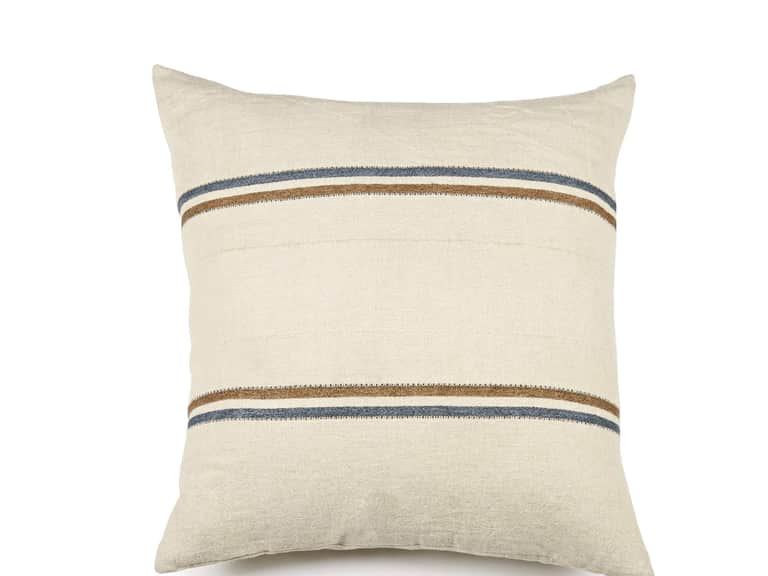
Embroidery gives a pillow a raised or patterned detail that can be subtle from across the room and more intricate up close. A narrow embroidered stripe, a geometric motif, or a climbing floral design can add definition without requiring a high-contrast print. On linen, the contrast between the woven ground and stitched thread makes the design especially tactile: the base cloth has its own grain, while the thread introduces a second kind of texture.
Motif and scale matter. A small, widely spaced pattern may read as a quiet accent, while dense embroidery can become the focal point of a chair or bed. Geometric stitching often feels structured and graphic; floral embroidery can soften a composition. Neither is automatically better. The right choice depends on whether the pillow should blend into a linen-heavy scheme or provide a clear point of interest.
Construction descriptions may identify embroidery as machine-made. That tells you how the stitching was produced, but it does not, on its own, determine whether the pillow is durable, luxurious, or easy to clean. For care, look for the full instructions and pay attention to warnings about agitation, heat, or dry cleaning. Embroidered areas may have raised threads or dense stitching that can snag against rough surfaces. Avoid dragging the pillow across upholstery with hooks, zippers, or other abrasive details, and don’t assume a stain-removal method is safe just because the ground fabric is linen.
When styling an embroidered pillow, give the design room to register. Pairing it with plain, textured cushions can keep a bed or sofa from feeling visually crowded. If several patterned pieces are used together, vary their scale and keep some quieter surfaces in the mix. The goal is not to match every motif, but to let each one have a reason to be there.
Piped borders: the polished outline
Piping is a narrow cord or shaped strip enclosed in fabric and sewn into a seam. Around a pillow, it creates a visible outline that defines the perimeter. Matching piping can make the edge feel neat and tailored; contrast piping makes the border more noticeable and can pick up a color elsewhere in the room. Either way, it gives the pillow a framed appearance that differs from a plain, unaccented seam.
A piped edge can help a decorative pillow look finished and composed, especially when the fabric itself is softly textured. It can also make a square or rectangular shape feel more clearly defined against a bedspread or sofa. This is a visual effect, not a guarantee that the pillow will hold a particular shape: the insert, dimensions, and construction all contribute to its profile.
Because piping sits at the seam, it deserves a quick inspection when a pillow is new and occasional attention over time. Check that the cord is evenly enclosed and that the seam looks secure. During everyday use, rotate and fluff the pillow as appropriate for its fill, and avoid pulling on the trim if it catches. If the care label calls for professional cleaning, follow it rather than trying to scrub the piping at home. A border can be made from a different fabric or contain a different construction from the linen body, so treating the entire pillow as one simple material may create problems.
For a restrained look, choose piping close in tone to the linen. For a more graphic effect, a contrasting edge can make the shape stand out. In a layered arrangement, a single piped pillow can provide structure among softer, less tailored pieces.
Knife edges and other finishes
A knife edge is a clean seam where the front and back panels meet without an added flange or decorative border. The result is often a straightforward silhouette: the attention stays on the fabric, pattern, or embroidery rather than on a frame around the pillow. That simplicity can be especially effective when the linen has a pronounced weave or the design already includes surface detail.
A knife-edge finish does not mean a pillow is plain. It can accompany embroidered stripes, a richly textured fabric, or a distinctive color. It simply avoids the additional outline that piping or a flange would create. This makes the finish versatile: a clean edge can sit comfortably beside cushions with more elaborate detailing without competing for attention.
Other common finishes include flanges, which extend beyond the main seam to form a border, and hemmed edges, which fold and secure the fabric for a crisp finish. Each changes the pillow’s visual footprint. A flange adds width around the cushion; a hem gives the edge a more defined boundary; piping creates a corded line. Product descriptions may use these terms, so reading them can help clarify what “finished” means in practice.
When choosing between finishes, think about the surrounding textiles. A bed with decorative shams and stitched sheets may benefit from a simpler accent pillow. A calm, minimally layered sofa may welcome one small detail that draws the eye. Texture, color, and finish can be mixed, but the arrangement usually feels more intentional when not every pillow is making the same kind of statement.
The insert changes the feel and shape
A decorative pillow cover and its insert are not the same thing. Some covers are sold without an insert, letting the owner select a fill and level of loft separately. Other pillows arrive with a filled interior. That distinction matters for both styling and care: a removable cover may be washable while the insert is not, or the care instructions may apply to the assembled pillow rather than the cover alone.
Feather-and-down fills are often described as soft or yielding, but the precise feel depends on the construction and amount of filling. Other inserts can feel firmer or hold a more upright shape. There is no universally correct choice. Consider whether the pillow is primarily an accent, a back support for sitting, or something that will be handled often. A pillow used for lounging may need a different balance of comfort and resilience from one that is mostly arranged on a bed.
Before washing a cover, confirm whether it can be removed without stressing a zipper or seam. If the insert is separate, follow its own label and keep it away from a cleaning process intended only for the shell. If the pillow cannot be disassembled, treat the care instructions as applying to the whole construction. Filling, lining, embroidery, and trim can each narrow the safe range of cleaning options.
For a simple example of a linen accent cover, the Auburn Pillow Cover is described as 100% linen with a washed finish and is sold separately from its insert. Its construction illustrates why it is useful to check what is included before planning a pillow arrangement or cleaning routine. Always consult the product’s current care guidance for handling specifics.
Linen’s natural texture is part of the design
Linen is made from flax fiber, and its appeal often lies in a surface that looks and feels different from a perfectly smooth fabric. The weave may show gentle variation, and the cloth can drape in a relaxed way. Those qualities help linen decorative pillows fit both pared-back interiors and more layered rooms. A neutral linen cover can soften a crisp arrangement; a colored or embroidered one can add depth without relying on a glossy finish.
It is worth resisting the idea that every crease is a flaw. Linen commonly has a relaxed appearance, and a washed finish may emphasize that easy, lived-in character. If a sharper look is preferred, check the care instructions before ironing or steaming. Some products permit ironing; others may have finishes, trims, or embroidery that require a different approach. Heat and pressure should never be improvised on a decorative surface.
Likewise, broad claims about linen’s performance do not replace product-specific information. Fiber content, weight, weave, dye, finishing, and construction all affect the finished textile. Two pillows described as linen may behave differently in use and care. A useful product description identifies the material and gives clear instructions; where details are missing, it is sensible to seek clarification rather than guess.
How to read care instructions before styling
Care is not an afterthought to solve once a spot appears. It is part of choosing a decorative pillow in the first place. A dry-clean-only label may be entirely reasonable for an embroidered or multi-component accent, but it signals a different maintenance commitment from a machine-washable cover. Check the instructions before purchasing or placing the pillow in a high-use area, especially if it will be exposed to pets, children, food, or frequent lounging.
Look for a few specific points:
- Cleaning method: Does the label specify machine washing, hand washing, spot treatment, or professional dry cleaning?
- Water temperature and cycle: If washing is permitted, note whether the directions call for cold water, a gentle cycle, or other limits.
- Drying: Check whether line drying, low heat, or another method is recommended. Avoid assuming that a linen cover can tolerate any dryer setting.
- Ironing or steaming: Confirm whether heat is permitted and whether the instructions distinguish between the linen ground and decorative details.
- Removable components: Find out whether the cover can be removed and whether the insert has separate instructions.
- Warnings about products: Bleach, fabric softener, and stain treatments can be restricted. Follow the label rather than applying a familiar laundry routine automatically.
Care labels and product notes are more reliable than a general rule about linen. If an item is described as dry clean only, do not put it through a home wash simply because its shell is linen. If the instructions are unclear, contact the maker or seller for guidance before cleaning. Keep that guidance with the pillow’s other care information so it is easy to find later.
Everyday habits that help preserve a decorative pillow
Good maintenance often begins with gentle handling. Rotate pillows in a busy room so one side is not always exposed to the same contact, and fluff them according to the insert’s needs. Keep them away from sharp objects and rough hardware that might pull embroidered threads or catch a seam. If a pillow has a removable cover, take care when opening and closing it so the fabric is not trapped or strained.
For a fresh mark, resist the urge to rub aggressively. Rubbing can spread a stain, distort the weave, or disturb embroidery. Blotting may be appropriate for some materials, but it is not a universal solution; check the care instructions first, especially for a decorative pillow with contrasting trim or a specialty finish. Do not apply a household cleaner to a visible area without confirming that it is suitable for the fabric and its detailing.
Storage also makes a difference. When a pillow is not in use, keep it in a clean, dry place and avoid compressing it for long periods if the fill could lose loft. Protect delicate embroidery from snagging against other textiles. If seasonal storage is part of the routine, make sure the pillow is clean and fully dry in accordance with its care guidance before putting it away.
These habits are deliberately simple. Decorative textiles do not need constant fussing, but they do benefit from attention suited to their materials. A little restraint—particularly around cleaning products, friction, and heat—can help preserve the look of a linen pillow without trying to make its naturally textured surface appear unnaturally perfect.
A quick guide to choosing a finish
If the options start to blur together, think first about the role the pillow will play. A plain linen cover with a knife edge can be an easy foundation for a layered bed. Embroidery offers a more decorative focal point, while piping adds a clear outline. A flange provides a broader border and can make the pillow feel more formal. These are tendencies, not strict rules; color, scale, and fabric weight can change the effect.
- Choose embroidery when you want surface detail or a motif that can be appreciated at close range.
- Choose piping when a defined perimeter or a subtle color contrast would help the pillow stand out.
- Choose a knife edge when you want the linen texture or pattern to remain the main event.
- Consider a flange when a wider, more visible border suits the formality or scale of the arrangement.
Then check the practical details: dimensions, whether the insert is included, fiber composition, closure, and care directions. A pillow that looks right but is difficult to maintain in its intended setting may not be the most useful choice. Conversely, a care requirement that fits your routine can make a beautifully detailed piece easier to enjoy for the long term.
The finishing touch is knowing what you own
Linen decorative pillows succeed through a thoughtful balance of material and detail. Embroidery brings pattern into the weave. Piping frames the edge. A knife seam keeps the silhouette clean. The insert affects loft, and the care label sets the rules for keeping the whole construction in good shape. None of these features works in isolation; together, they determine whether a pillow feels relaxed, tailored, expressive, or understated.
Before styling one on a bed or sofa, take a moment to read its description and care instructions. Check whether the shell is removable, what the pillow contains, and whether decorative elements call for professional cleaning. Then choose a place where its texture and finish can be appreciated without exposing it to unnecessary wear. That small bit of knowledge can turn a pretty accent into a considered, practical part of a room—and keep its details looking their best.